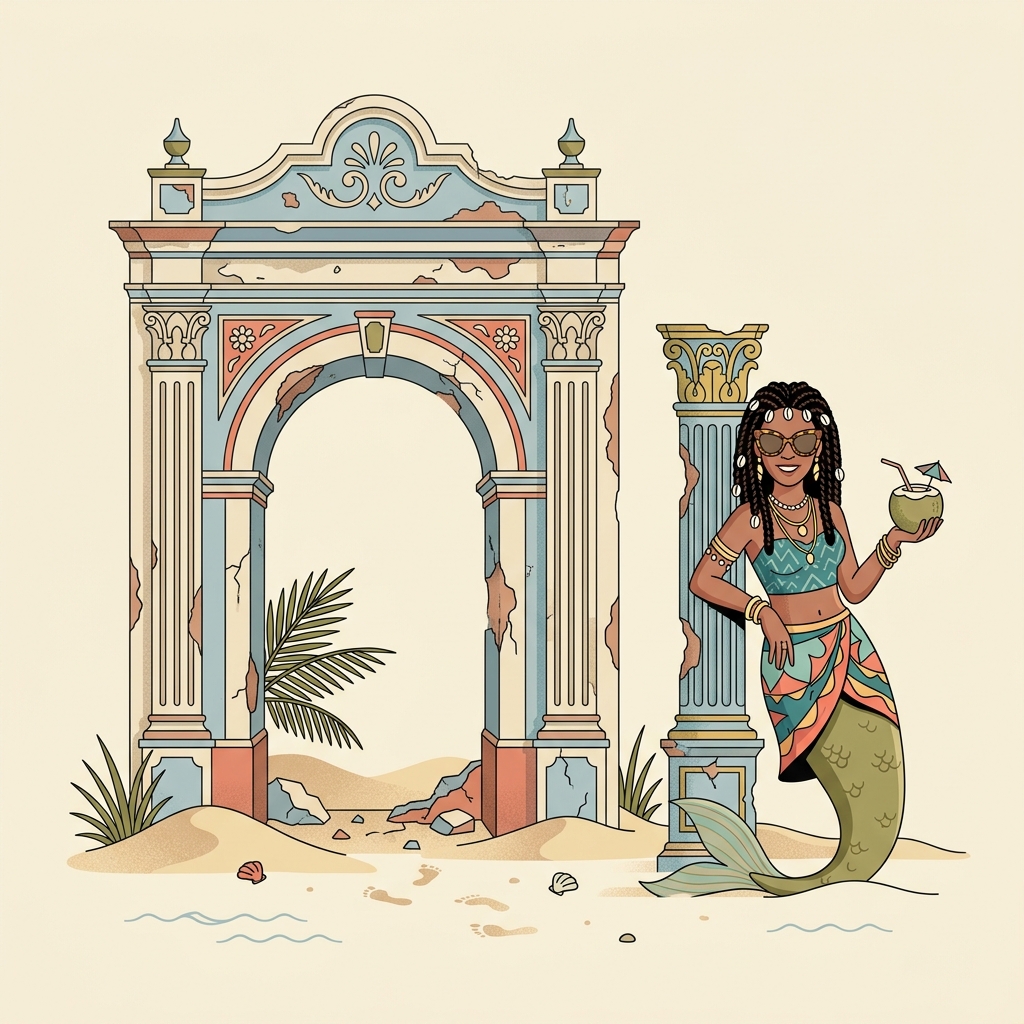
Grand-Popo is not just a beach destination; it is an open-air history book. The Afro-Brazilian Heritage, carried by the Agouda community, constitutes one of the most fascinating cultural pillars of the city. Here, the names of Joseph da Silva, Joaquim de Souza, or the Medeiros lineage still resonate in memories and along the ocher facades of the old quarters.
Sobrado Architecture: The Two-Story Houses
Strolling through the sandy alleys, you will be struck by the elegance of these large two-story houses called Sobrados. These buildings, constructed in the 19th century by freed former slaves returning from Brazil, combine Portuguese colonial aesthetics with the local expertise of the coast.
Signature Details
Admire the wrought-iron balconies, the precious black wood floors, and the large louvered windows designed to let the Atlantic sea breeze circulate. These houses are the symbol of social advancement and a cultural blend unique in the world. Some of these residences, though weathered by salt, preserve azulejos (ceramic tiles) brought by merchant ships of the era.
The Vodun Symbiosis: Heritage as the Sacred
In Grand-Popo, the Brazilian heritage was not built against ancestral traditions, but with them. Vodun spirituality permeates every stone and every family. It is not uncommon to see a Catholic chapel alongside a family temple dedicated to Dan (the serpent) or Mami Wata (the goddess of the waters).
- Ancestral Protection: Each Agouda clan has its own protection rituals. The Night Watchers (Zangbeto) are often the silent protectors of these precious family legacies.
- The Burrin Dance: If you visit Grand-Popo during the end-of-year holidays, you might have the chance to witness the Burrin, a traditional Brazilian dance reinterpreted with Beninese percussion.
What to see during your visit
- Gbecon House: A perfectly preserved example of a 19th-century aristocratic residence.
- Villa Karo: A contemporary cultural center established in restored ancient buildings, witnessing the vitality of cultural exchange. Learn more about Villa Karo
- The Historical Quarter: Get lost in time through the rhythm of your walk. In Praise of Slowness
Concierge Tips
- Respect the Site: Many of these houses are still lived in by current family heads. Always ask for permission before photographing interiors.
- Ethnographic Guide: We can organize a private visit with a local historian to decipher the complex genealogies of the Agoudas of Grand-Popo.
Stay in History
To fully live this experience, we recommend sleeping in structures that respect this architecture of earth and wind.
- Stay: Our selection of exceptional Ecolodges
- Typical Menu: Ask to taste the black salt-fried fish from the Mono. The Salt of the Lagoon