
What is Vodun
Vodun is far more than a religion: it is a system of thought, a cosmology and a way of life that has structured society on Benin's coast for centuries. Born on the Abomey plateau and the Couffo region, Vodun spread along the Gulf of Benin through trade routes and population movements.
In Grand-Popo, Vodun is everywhere. It marks the seasons, births, marriages and funerals. Contrary to popular misconception, it is not sorcery or dark practice, but a structured religious system with its own priests, initiates, codes and philosophy.
Explore our complete guide to Grand-Popo's culture and heritage to situate Vodun within its broader cultural context and understand how it permeates every aspect of local life.
The Vodun pantheon counts hundreds of deities, each associated with a natural element, a force or an aspect of the human condition. It is estimated that over 60 per cent of Benin's population practices Vodun, often alongside Christianity in a peaceful, accepted syncretism.
Origins and history
Vodun's roots reach back to the Kingdom of Dahomey in the 17th century. The word itself means "spirit" or "deity" in the Fon language. Oral tradition tells that Vodun was born in the region of Allada and Ouidah before spreading southwest to Grand-Popo.
The slave trade became its involuntary vector of propagation: millions of deported Africans carried their faith with them, giving birth to Haitian Vodou, Brazilian Candomble and Cuban Santeria. Grand-Popo, a secondary but active slave-trade port, saw these beliefs pass through to the New World.
In Benin, the official recognition of Vodun as a state religion in 1996 marked a turning point. January 10 became a national holiday, a day when the entire country honors its ancestral deities. In Grand-Popo, this celebration takes on particular intensity.
Main deities
The Vodun pantheon is vast and complex. Here are the deities most venerated in Grand-Popo:
Legba is the most important of the Vodun. Messenger between humans and gods, guardian of crossroads and doorways, his altar stands at the entrance of almost every compound. Legba is recognized by his stone or earth phallus, a symbol of life and mediation.
Mami Wata embodies the waters: lagoon, river and ocean. In a coastal town like Grand-Popo, her presence is powerful. Offerings of fruit, mirrors and ribbons are made to earn her favor.
Sakpata is the master of the earth and epidemics. He heals as much as he punishes. His priests know medicinal plants that modern medicine is beginning to study.
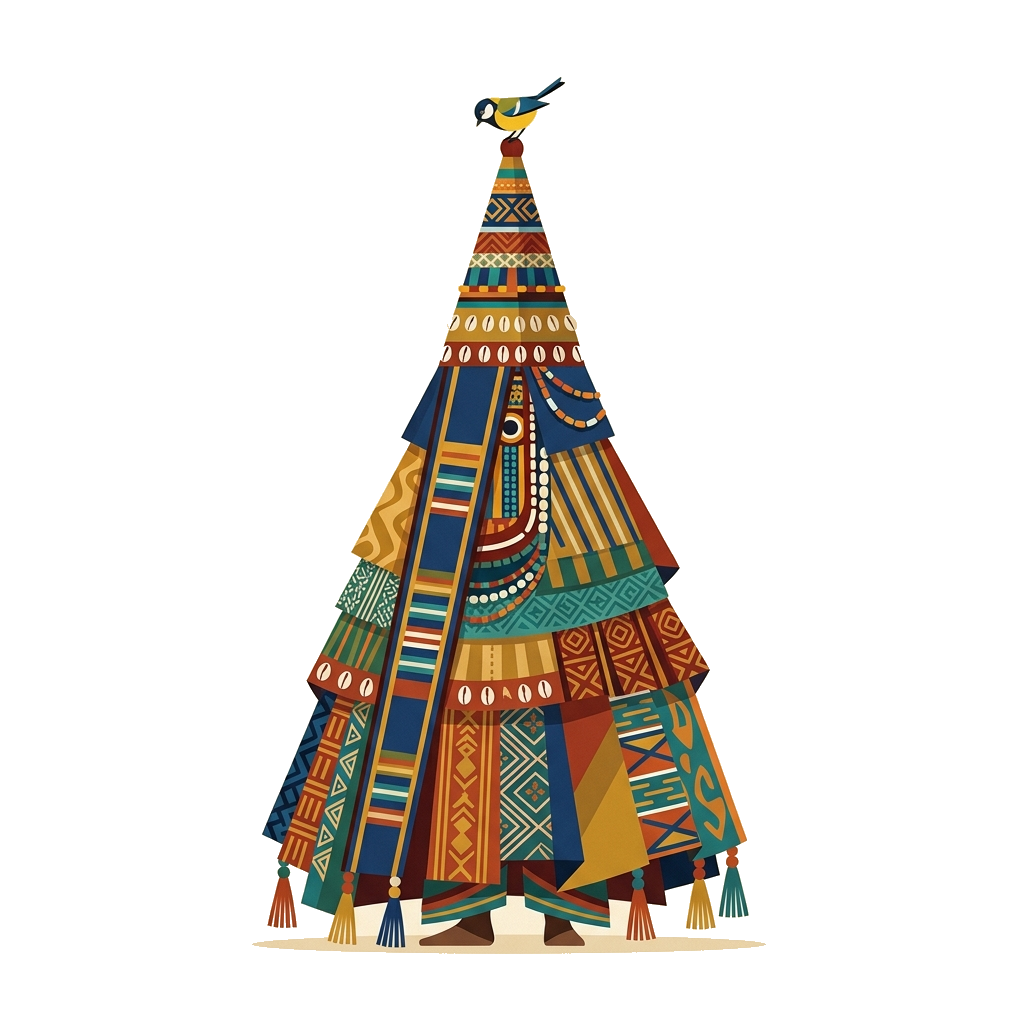
Zangbeto and Egungun are not deities strictly speaking, but night guardians and returning ancestors. Their spectacular dances during ceremonies are among the most impressive moments of Vodun practice.
Ceremonies and rituals
Vodun ceremonies are collective events that can last several hours, sometimes several days. They blend music, dance, possession, animal sacrifices and prayers. The sacred drums, houré, adjogan, cougan, beat precise rhythms known only to initiates.
In Grand-Popo, the most significant ceremonies take place during the Vodun festival on January 10, but more intimate rituals unfold throughout the year: divinatory consultations through Fa (the oracle system), offerings to ancestors, purification ceremonies.
The initiates, called vodunsi, devote years to learning the codes and songs. Their clothing, often white or red, signals their allegiance to a particular deity. Possession by the spirit is considered an honor, a moment when the divine speaks through the human.
Sacred sites in Grand-Popo
Several sites in and around Grand-Popo are considered sacred by Vodun practitioners:
The sacred forest lies between the lagoon and the first neighborhoods, sheltering centuries-old trees that no one is allowed to cut. This is where certain initiations take place, away from prying eyes.
Legba's altars can be found in every neighborhood, often at crossroads. Fresh offerings are visible year-round: coconuts, maize, local alcohol.
The Vodun convent exists in several locations in Grand-Popo, where novices are trained. These spaces are not open to the public, but their very presence reminds that spirituality is a daily matter.
The ritual beach hosts certain ceremonies facing the ocean, the point of contact between the world of the living and that of ancestors who crossed the Atlantic.
Family sanctuaries occupy a reserved space in every compound: a small hut, a planted tree, an arrangement of objects. Vodun begins at home.
Our articles on Egungun masks and Zangbeto guardians will deepen your understanding of these fascinating traditions.
Attending a ceremony
It is possible to attend a Vodun ceremony in Grand-Popo if you respect certain basic rules:
Find a local guide never go it alone. A guide will open doors you could never push by yourself. Local guides know the families, the priests and the right moments.
Dress appropriately wear covering clothing in sober colors (white is recommended). Avoid black, which is sometimes associated with negative energies.
Ask permission before taking a photo or even entering a ritual space, ask. Discretion is a mark of respect.
Do not touch offerings, altars and sacred objects should not be touched without authorization.
Observe in silence the songs, dances and possessions are not a spectacle. Your silence is your best guide.
Give it is customary to leave a modest offering (some fruit, maize, or 2,000 FCFA, about EUR 3) as a sign of gratitude.
The best periods to attend a ceremony are the Vodun festival on January 10 and, more occasionally, during important funerals in the community.
Vodun in daily life
Vodun is not confined to ceremonies. It permeates the daily lives of Grand-Popo's inhabitants in multiple ways:
In the morning, many greet Legba when crossing their doorstep. Before a journey, they consult Fa to know favorable days. Fishermen offer part of their catch to Mami Wata before heading to sea. Pregnant women wear protective gris-gris.
Grand-Popo's markets sell ritual ingredients: incense, sacred wood powder, vegetable oils, feathers, cowrie shells. Nothing occult about it: these products are part of the local pharmacopoeia and ordinary spiritual life.
The agricultural calendar itself follows the recommendations of Vodun priests. Sowing and harvesting happen at specific times determined by divination. In a region where land and water are vital, this harmony between spirituality and nature is a form of ecological intelligence.
Vodun vs Hollywood voodoo
It is time to clear up the misunderstandings. The Vodun practiced in Grand-Popo and throughout Benin has nothing to do with the "voodoo" image peddled by American horror films.
No dolls pierced with pins this imagery comes from 1950s movies and has no basis in real practice.
No curses Vodun is a religion of balance, not of cursing. Priests heal, advise and accompany.
No satanic worship Vodun predates Christianity by several centuries. Its deities are neither good nor evil: they are forces of nature to be reckoned with.
No human sacrifices this slanderous accusation is a colonial invention designed to discredit African religions.
What films call "voodoo" is Hollywood fiction that borrowed a few symbols the word itself, the dolls, the pins to create an exotic, terrifying myth. The Vodun of Grand-Popo is a living, respected religion, counting doctors, teachers, lawyers and fishermen among its practitioners.
FAQ
Is Vodun a recognized religion in Benin?
Yes, Vodun has been officially recognized as a state religion since 1996. January 10 is a national public holiday dedicated to the Vodun festival.
Can I visit a Vodun convent in Grand-Popo?
Convents are private, sacred spaces rarely open to outsiders. Some local guides can arrange a visit if the community agrees, but this remains exceptional.
Do I need to be initiated to attend a ceremony?
No. Public ceremonies, especially those on January 10, are open to all. Private rituals (initiations, funerals) are reserved for community members.
Is Vodun dangerous?
Absolutely not for the respectful visitor. Like any religious practice, it requires courtesy and observance of local codes, but there is no danger in taking an interest in Vodun in Grand-Popo.
How can I tell the Vodun deities apart?
Each deity has its attributes, colors and days. Legba is associated with crossroads (red, Wednesday), Mami Wata with water (blue-white, Friday), Sakpata with the earth (black, Monday). A local guide will explain these codes gladly.
Plan Your Visit
Discover the magic of Grand-Popo with our curated local experiences.