
Activities and Experiences in Grand-Popo
Grand-Popo is not a place you visit — it is a place you experience. Between the Mono River and the Atlantic Ocean, Grand-Popo activities are as varied as the landscape itself: gliding by pirogue through calm mangrove-lined waters, hauling nets with fishermen at sunrise, watching a Zangbeto performance at nightfall, or simply doing nothing before the vast ocean. This guide covers everything you need to choose your activities and plan your stay.
Must-do activities
Grand-Popo offers a range of activities that shift with the time of day. Mornings on the river are calm and birds are active — ideal for a pirogue excursion or birdwatching. Midday is perfect for the beach and swimming. Late afternoon brings cooler temperatures for cycling or walking. Evenings belong to the beach bars and traditional ceremonies.
For a complete experience, plan at least 3 to 4 days. This lets you combine water activities, cultural discoveries and rest without rushing. Activities suit all levels and can be adapted for families as well as solo travellers.
The complete Grand-Popo guide helps you organise your stay.
Pirogue excursion on the Mono
The pirogue excursion on the Mono River is the most popular activity in Grand-Popo. It offers the best way to discover the region from the water, penetrate the mangroves and get close to the fishermen's way of life.
Departures are early morning, ideally between 7am and 8am. The river is calm, the light is good for photos, and the birds are most active. The trip lasts between one and a half and three hours depending on the route chosen.
Several options are available: heading upstream through fishing villages; downstream to Bouche du Roy, where the river meets the ocean; or exploring the mangrove channels, a vegetal labyrinth where light filters through the mangroves.
Local guides who know the river better than anyone steer the pirogues. They will point out birds, explain fishing techniques and share their knowledge of the ecosystem. Expect 10,000 to 20,000 FCFA (15 to 30 EUR) per person for a two-hour excursion.
Our dedicated page tells you more about the pirogue excursion.
Artisanal fishing with local fishermen
Spending a morning fishing with the Xwla fishermen is an experience that changes your perspective. No mass tourism here: you board a traditional pirogue, take part in casting and hauling nets, and discover fishing techniques passed down through generations.
Fishermen usually leave before dawn. It is demanding, but those who do it come back transformed. The ocean at sunrise, the collective effort, the fishermen's pride in showing you their daily life — this is Grand-Popo at its most authentic.
This activity is physical and depends on weather conditions. Not recommended for those prone to seasickness. Prices vary by duration, expect 15,000 to 25,000 FCFA (23 to 38 EUR) per person.
For more details, see our guide on artisanal fishing in Grand-Popo.
Beach and swimming
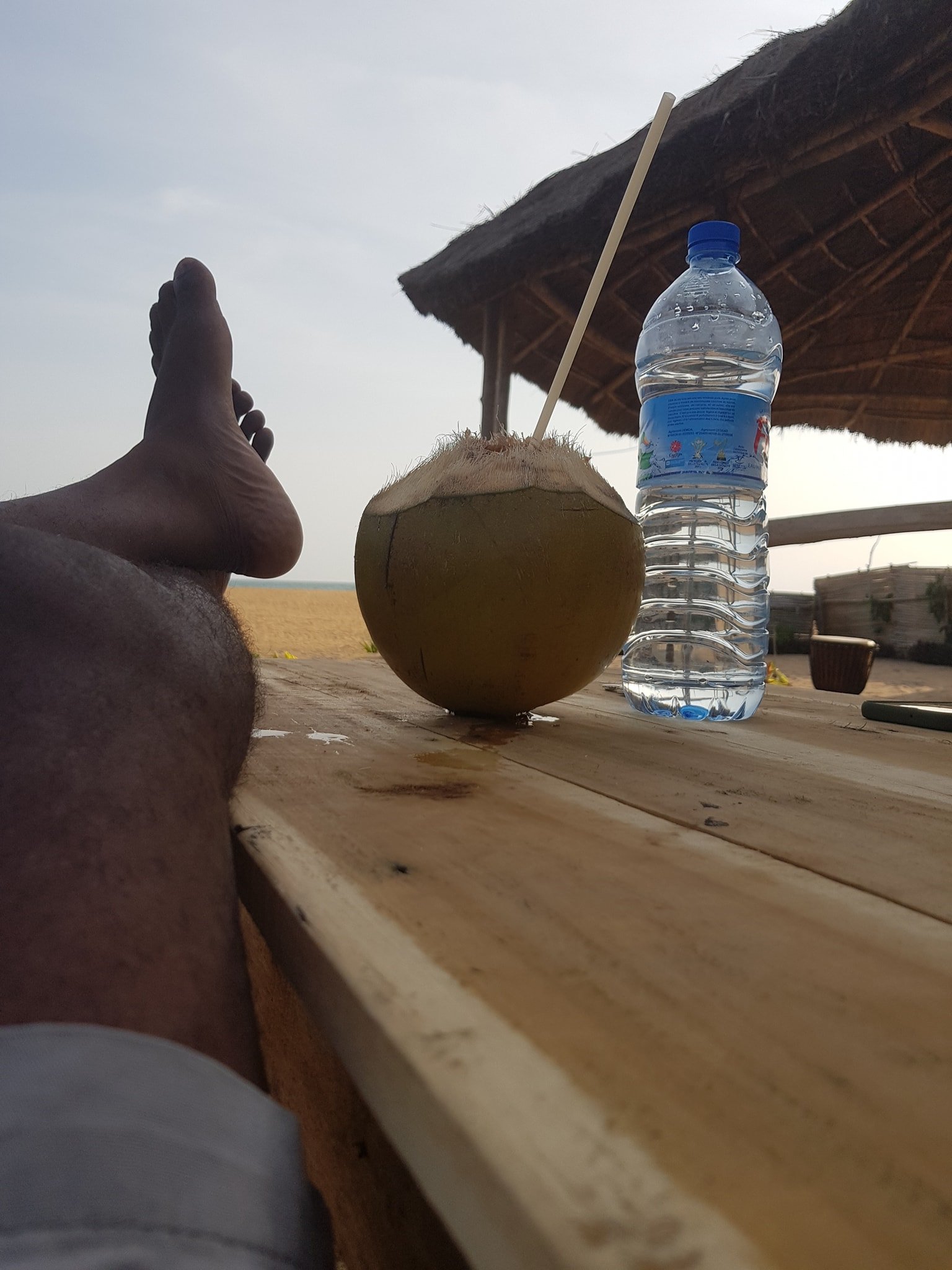
Grand-Popo's beaches are one of the main reasons to come, and their expanse takes your breath away. Fifteen kilometres of golden sand lined with coconut palms, a sea stretching to the horizon, and often no other tourist in sight.
Swimming requires caution. The Atlantic Ocean is not a pool: currents can be strong and waves impressive. The safest areas are those monitored by ecolodges. Always ask before entering the water. Water shoes are recommended because of rocks and sea urchins.
Morning, between 7am and 10am, is the best time to enjoy the beach. The light is soft, the heat bearable. Late afternoon, from 4pm, the beach is ideal for a long walk or sunbathing before sunset.
Our Grand-Popo beaches guide details the safe swimming areas.
Villa Karo cultural centre
Villa Karo is the cultural heart of Grand-Popo. Housed in a beautifully restored former Finnish-African colonial home, it hosts resident artists from around the world. Writers, musicians, photographers, artisans — all come to draw inspiration from this unique ocean-facing setting.
Villa Karo is open to visitors. You can explore the exhibition spaces, consult the well-stocked library, attend concerts or performances, and sometimes meet the resident artists. The garden, with its large trees and shaded benches, is a haven for reading or meditation.
Entry is free or low-cost depending on events. Check the programme on site or at your accommodation. Villa Karo regularly runs workshops open to the public.
Our complete guide on Villa Karo gives the events programme.
Yoga and wellness
Grand-Popo's setting lends itself naturally to wellness. The sound of the waves, the sea breeze, the slow rhythm of local life — everything invites you to slow down. Several accommodations offer yoga sessions on the beachfront, often at sunrise.
Yoga in Grand-Popo is not a standardised activity. Each teacher brings their own sensibility, and sessions adapt to the location: on the beach with sand underfoot, on a terrace overlooking the ocean, or in a garden shaded by coconut palms. Some accommodations offer wellness packages including massages and treatments.
Expect 5,000 to 15,000 FCFA (8 to 23 EUR) per session depending on the location and duration. Ask directly at your accommodation.
Discover our selection on yoga and wellness in Grand-Popo.
Cycling and exploration
Cycling is the ideal way to explore Grand-Popo and its surroundings. The terrain is flat, distances are reasonable, and roads are quiet. In one hour you can reach Bouche du Roy from the town centre.
Several accommodations lend bicycles to their guests. Otherwise, rentals are available in the town centre for 3,000 to 5,000 FCFA (5 to 8 EUR) per day. Bring water and sun protection — the sun is generous.
Recommended routes: the coastal road to Bouche du Roy (10 km, easy), the lagoon circuit through fishing villages (15 km, some sandy patches), or the ride to the Togolese border (20 km, paved road).
Our cycling in Grand-Popo guide offers detailed routes.
Surf and bodyboard
The Atlantic Ocean that washes Grand-Popo's shores offers powerful, regular waves, especially between November and March during the dry season. While you won't find Californian tubes, Grand-Popo's breaks offer honest conditions for surfing and bodyboarding in a crowd-free setting.
The main spot is in front of Lion Bar and the central beach ecolodges. Waves are moderate (one to two metres depending on swell), with a sandy bottom that limits risks. Best conditions are in the morning, between 6am and 9am, when the wind is still light and the water surface smooth. In the late afternoon the wind picks up and waves become more irregular.
Equipment (bodyboards, leashes) can be rented from some accommodations or bought cheaply at the Grand-Popo market. Surfboards are rarer — better to bring your own if you are a regular surfer. Expect 5,000 to 10,000 FCFA (8 to 15 EUR) for a day's bodyboard rental.
Safety is paramount. Atlantic currents can be treacherous, especially at low tide. Never surf alone and ask local fishermen about the day's conditions. Beginners can find guided sessions through some ecolodges. For experienced surfers, the waves at Bouche du Roy are worth the detour: the channel creates longer, more hollow waves.
Photography
Grand-Popo is a playground for photographers. The light is special: the clear sky, the sun's reflection on the ocean, and the salty haze floating above the waves create unique conditions, especially at sunrise and sunset. Both seasoned photographers and keen amateurs will find plenty to fill their memory cards.
Good subjects are everywhere. Landscapes: Bouche du Roy at sunset, reflections of mangroves in the calm lagoon waters, pirogues beached on the sand. Portraits: fishermen preparing their nets at dawn, women bent over their salt pans, children playing in the waves. Street scenes: the lively market, fish sellers on the beach, card games in the shade of coconut palms.
A few practical tips. Light is harsh between 10am and 3pm: favour the golden hours (7am-9am and 4pm-6pm) for landscapes. A polarising filter reduces reflections on water and saturates the greens of vegetation. Respect your subjects: always ask permission before photographing someone. A smile and a greeting usually suffice, and a small tip (500 FCFA, less than one euro) is appreciated. Fishermen and artisans are generally happy to pose if approached respectfully.
Photographers with a macro lens will find their reward in gardens and mangroves, where insects and butterflies offer abstract patterns. Those who prefer wide open spaces will take away images of deserted beaches stretching to the horizon.
Local cooking classes
Grand-Popo's cuisine deserves attention. A blend of Xwla influences (based on fish and shellfish), Afro-Brazilian (palm oil, gari, tropical fruits) and colonial, it offers a palette of flavours that surprises and delights. Several families and small restaurants offer cooking classes to learn the region's signature dishes.
A typical class lasts about three hours. It starts with a market visit to choose ingredients: fresh fish (capitaine, bar, sole), prawns, tomatoes, chillies, okra, local spinach. The guide explains how to recognise fish caught that day, negotiate prices and select spices. Back in the kitchen, you prepare one or two complete dishes under your host's supervision.
Dishes you will learn include gba na (dried shrimp sauce with tomato and chilli), kplala (fish steamed in banana leaves), and akassa (fermented corn cakes served with a clear sauce). Each recipe comes with explanations of family variations and the specific occasions when the dish is served.
Classes end with sharing the meal, a convivial moment tasting what you have prepared while chatting with the host family. Expect 20,000 to 35,000 FCFA (30 to 53 EUR) per person for a complete class including the market. Some accommodations offer combined packages. Ask at your accommodation or contact us to be put in touch with a host family.
Sunset at Lion Bar
Lion Bar is an institution in Grand-Popo. Set directly on the beach with uninterrupted views of the ocean, it is the ideal spot to watch the sunset. Tables are placed on the sand, almost at the water's edge.
The atmosphere is relaxed: soft music, fresh fruit cocktails, local beer and sodabi. The magic moment is when the sun plunges into the ocean, setting the sky ablaze with orange and purple hues. It is also an excellent place to meet other travellers and exchange stories.
Lion Bar also serves quality local food. Ideal for dinner after sunset, feet in the sand, lulled by the sound of the waves.
See our Lion Bar guide for opening hours and suggestions.
Activity catalogue
| Activity | Duration | Budget (FCFA) | Budget (EUR) |
|---|---|---|---|
| Mono pirogue excursion | 2-3h | 10,000-20,000 | 15-30 |
| Fishing with fishermen | 3-4h | 15,000-25,000 | 23-38 |
| Beach yoga | 1h | 5,000-15,000 | 8-23 |
| Bike rental per day | 1 day | 3,000-5,000 | 5-8 |
| Villa Karo visit | 1-2h | Free-5,000 | 0-8 |
| Wellness massage | 1h | 15,000-30,000 | 23-46 |
| Cooking class | 3h | 20,000-35,000 | 30-53 |
| Sea turtle outing | 2-3h | 10,000-20,000 | 15-30 |
| Bodyboard/surf | 2-3h | 5,000-10,000 | 8-15 |
| Guided photo tour | 2-3h | 10,000-20,000 | 15-30 |
All prices are indicative and may vary by season and provider.
Ready for unique experiences?
What makes Grand-Popo's activities so valuable is that they are not standardised. Every pirogue excursion is different, every encounter with a fisherman is unique, every sunset is a surprise. Grand-Popo is not consumed — it is savoured.
To book your activities or get personalised advice, contact us on WhatsApp. Our local partners are selected for the quality of their welcome and their respect for the environment.
Plan Your Visit
Discover the magic of Grand-Popo with our curated local experiences.